

























































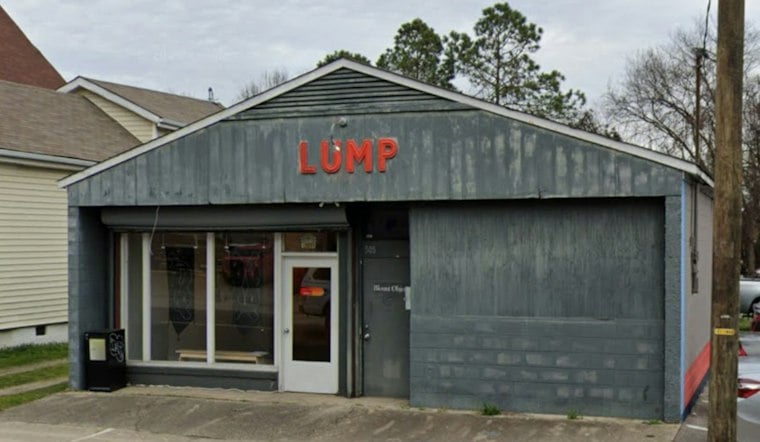
After three decades as one of downtown Raleigh's scrappiest art institutions, Lump gallery has closed — and in its place, a new space called Plum is opening its doors this weekend inside the very same cinder-block building on South Blount Street. Founder Bill Thelen handed over the keys to a three-person team at the end of August, but he insists the story isn't over. “Lump is not completely dead yet,” Thelen said, describing plans to transform the gallery into a giving foundation that funds artist projects while continuing on as a digital art entity.
The seed reporting on this transition comes from WUNC News, which spoke with Thelen and the new team stepping into the 505 South Blount Street building in downtown Raleigh. Thelen, now 60, co-founded Lump in 1996 with his partner Med Byrd Jr., and the two spent 30 years transforming what was once a lackluster commercial property into a gallery and a small set of affordable artist studios, according to INDY Week. Byrd still owns the building, which is why Plum is able to operate rent-free during its initial one-year pilot, INDY Week reports.
Who's Running Plum Now
Plum is led by Marty Rogers, Mary Beth Eisenstadt, and Madeleine Lyon, a trio with deep ties to Raleigh's DIY art scene. Rogers, an art educator, previously worked as an intern and studio manager at Lump. Eisenstadt is a graphic designer and painter, while Lyon previously worked in corporate fashion and biotech before starting Mend Mother, a clothing repair and alterations business, in 2024. Eisenstadt and Lyon had previously shared a studio at the Carter Building in Raleigh, and Mend Mother now occupies half of the Plum building.
Rogers described the new space's mission in blunt terms: Plum wants to welcome “fringe, emerging, evolving, and homeless-in-the-city art,” according to the same WUNC reporting. The name itself is an anagram and a nod to Lump, signaling continuity even as the physical gallery undergoes a transformation. Organizers describe Plum as less a complete departure from Lump than an evolution of it — an interdisciplinary art space that intends to keep things, in the team's words, weird and specifically queer in ethos.
What's Already Happened, and What's Next
Plum has been raising funds since summer 2026, using proceeds from benefit events for organization costs, furniture, and new lighting. The space has already hosted a screening of the 2006 horror film The Wicker Man and a Dolly Parton karaoke night, giving a preview of the eclectic programming to come. Plum officially opens Sunday, September 13, with a kickoff benefit that pairs a daytime party featuring food vendors with a nighttime party featuring musical performances.
Looking ahead, Plum plans to offer sewing and printmaking classes, songwriting groups, and monthly to weekly craft nights. The team also intends to host musical performances, film screenings, pop-up cafes, and an artist residency program. Thelen himself hopes to organize “drawing room” events at the new space, in which sound artists perform while attendees sketch drawings inspired by what they hear. Plum also plans to build an art book library drawn from Lump's own magazine archive and says it intends to use future funds to compensate exhibiting artists.
Lump's Long, Strange Run
Lump's history stretches back well before its final chapter. The gallery operated for 30 years as an underground and experimental art venue, housed in a windowless cinder-block building squeezed between an abandoned structure and a Baptist church, its facade marked by four fire-engine red letters spelling out its name, according to WALTER Magazine. As early as May 1999, Lump was already plugged into a national network of DIY galleries, hosting a carry-on art exchange called “The Soft Museum” with Seattle's Milky World gallery — an exchange that required all physical artwork to fit inside airplane overhead luggage compartments so organizers could avoid shipping costs.
In December 2016, gallery owner Kelly McChesney closed her own commercial Flanders Gallery to merge with Lump, taking over as director and helping steer the space into a 501(c)(3) nonprofit doing business as Art Now, INDY Week reported at the time. The following year, the Andy Warhol Foundation for the Visual Arts awarded Lump a $60,000 multi-year programming grant that helped fund experimental exhibitions and projects like Lump's uncensored zine, Blount Force. McChesney went on to become the City of Raleigh's Public Art Director in 2018, leading the municipal percent-for-art program — one sign of how Lump served as an incubator for Triangle arts leaders who later shaped civic arts policy. Management of the gallery then rotated among several Triangle-area artists before Thelen stepped back into direct leadership in 2023, as interim managers grappled with tight budgets and long commutes.
Even in its final years, Lump kept reaching beyond Raleigh. In March 2025, the gallery presented a curated exhibition titled “Good Grief: More Than A Feeling,” featuring six artists, at the SPRING/BREAK Art Show during Armory Arts Week in New York City.
A Tougher Landscape for Downtown Art Spaces
Plum's rent-free arrangement stands out against a backdrop of financial strain for Raleigh's physical art venues. The Contemporary Art Museum of Raleigh listed its 20,683-square-foot building at 409 West Martin Street for sale in August, after 15 years in the Warehouse District, citing unsustainable facility operating costs, according to Midtown Magazine. CAM Raleigh had already paused on-site exhibitions in June 2025 to reassess its long-term organizational model. Per WUNC's reporting on the Lump-to-Plum transition, CAM Raleigh's building sale was part of the broader shift underway in the city's arts scene.
CAM Raleigh isn't alone. Multiple downtown Raleigh art spaces, including 311 Gallery, City Market Artist Collective, and Visual Art Exchange, have closed or relocated in recent years as rising real estate costs and tight funding reshape the local creative landscape, Midtown Magazine reports. Against that backdrop, Plum's ability to move into an established building without paying rent for its first year offers a rare cushion — one that gives the new team room to experiment before the financial pressures reshaping the rest of downtown Raleigh's art world start bearing down on them too.





